
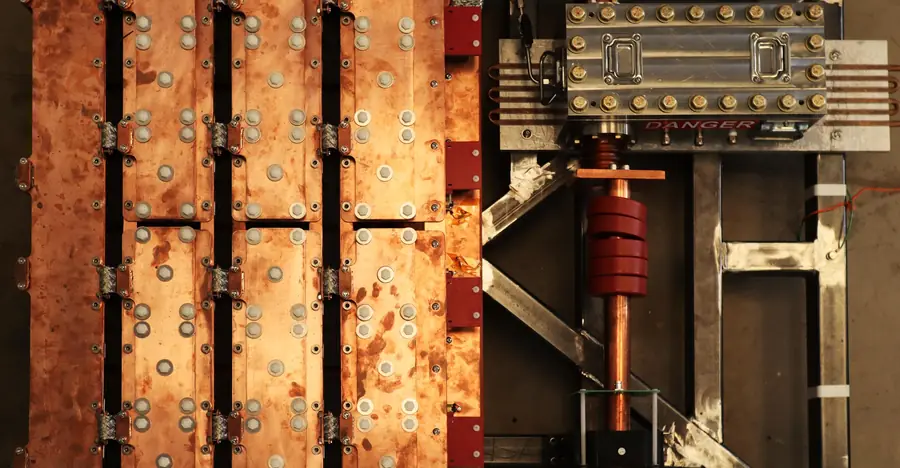
Fast fault protection for DC power.
We are developing a fast mechanical switch for hybrid DC circuit breakers, insulated with supercritical CO₂.
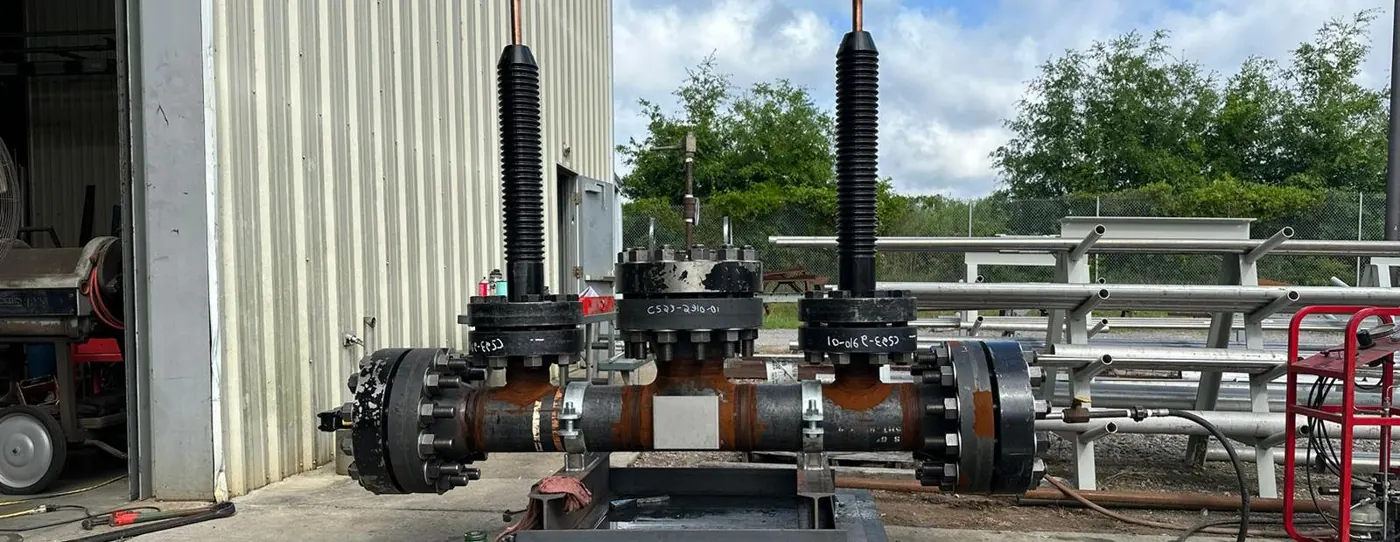
Research hardware at Georgia Tech's Plasma and Dielectrics Laboratory
- 280 kV/mmheld off by supercritical CO₂ at 10 MPa. DC, 0.1 mm gap, measured at Georgia Tech.
- 8 kApeak fault current commutated in a hybrid DC breaker at Georgia Tech, at reduced voltage.
- 8.9 kApeak arc quenched in supercritical CO₂. An AC test at Georgia Tech, published 2026.
A DC fault has to be stopped in milliseconds.
On a 60 Hz grid, AC current passes through zero 120 times a second, and breakers use that instant. DC never gives them one.
Electronics can force the current to zero, but they waste power while they conduct. So the best DC breakers pair them with a mechanical switch that gets out of the way fast.
We are building that switch.
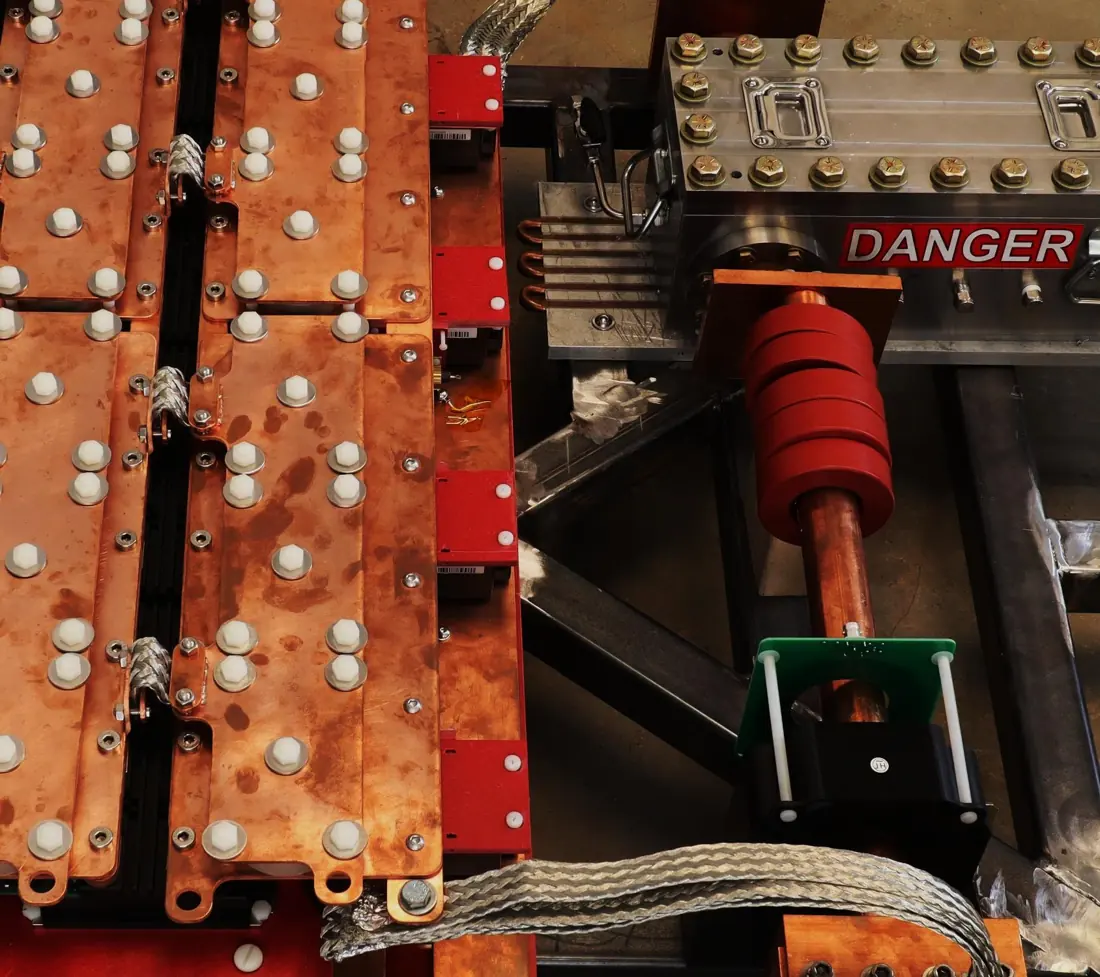
Once open, the switch has to hold off the full voltage within a millisecond.
Supercritical CO₂ is more than a hundred times denser than CO₂ in open air, and a dense fluid insulates. Stronger insulation means a shorter stroke and a faster switch.
What we are building.
| Product | Fast DC disconnect |
|---|---|
| Voltage | 12 kV DC |
| Insulation | Supercritical CO₂ |
| Design pressure | 10 MPa |
| Switching | Opens at zero current, no arc |
| Current, opening time, size | Being set with the first breaker and converter builders |
WattEDGE is developing a fast mechanical switch for hybrid DC circuit breakers, insulated with supercritical CO₂, sold as a component to the companies that build the power electronics.
Designing a DC breaker or converter?
Tell us the voltage, current and opening time you need.
Start at 12 kV. Climb.
The destination is compact high-voltage switchgear with no SF₆, the potent greenhouse gas that insulates most of it today. Europe bars SF₆ from new 52 to 145 kV switchgear in 2028 and from higher voltages in 2032.
- 12 kV DC design targetA fast DC disconnect
Planned first product.
- Medium-voltage DCThe same switch inside hybrid breakers
Carrying the current until the electronics take over.
- Higher-voltage DCModules in series
The same module, stacked.
- High voltageHigh-voltage switchgear
Here the fluid also has to quench an arc.

Alfonso Cruz, founder and CEO
A research engineer at Georgia Tech's Plasma and Dielectrics Laboratory, where he measured supercritical CO₂ breakdown, built the pressure vessels and designed the high-voltage bushings.
Photos show Georgia Tech research hardware.
Get in touch.
Or write to info@wattedge.co