
Supercritical CO₂ as a switching medium
A fluid dense enough to hold off high voltage across a very short gap. What has been measured so far.
What it is
Above 31 °C and 73.8 bar, carbon dioxide is neither gas nor liquid. It fills a vessel like a gas at a density between the two.
- Pressure
- 82 bar
- State
- Supercritical
- Denser than CO₂ in open air by
- 167 times
Why density matters
Breakdown starts when a free electron gains enough energy between collisions to knock another electron loose. SF₆ stops this by capturing electrons. CO₂ barely does, so it relies on density.
Insulation
SF₆ insulates by capturing free electrons. Dense CO₂ gets there another way: it gives them no room, so an electron collides before it gains the energy to start a breakdown. Above the critical point the fluid stays dense and in a single phase.
Arcs
A dense fluid carries heat out of an arc quickly.
In a hybrid breaker
The mechanical switch carries the load with almost no loss. On a fault, electronics take the current for an instant while the switch opens.
The switch opens with no arc. What it has to do is hold off the voltage within a millisecond of opening. At medium voltage that switch is usually a vacuum interrupter today. In the best-known high-voltage hybrid breaker it is insulated with SF₆.
How small can it be?
Size follows the gap the insulation needs. In Georgia Tech tests, supercritical CO₂ at 10 MPa held off about 280 kV per millimeter in DC.
The design runs at high pressure on purpose, because pressure is what makes the fluid dense. Our design target is 10 MPa, about 100 bar, in a steel vessel built to pressure code.
Review: A. J. Cruz Feliciano, Z. Jin, L. Graber, Applied Sciences 15(18), 2025.
Georgia Tech research hardware
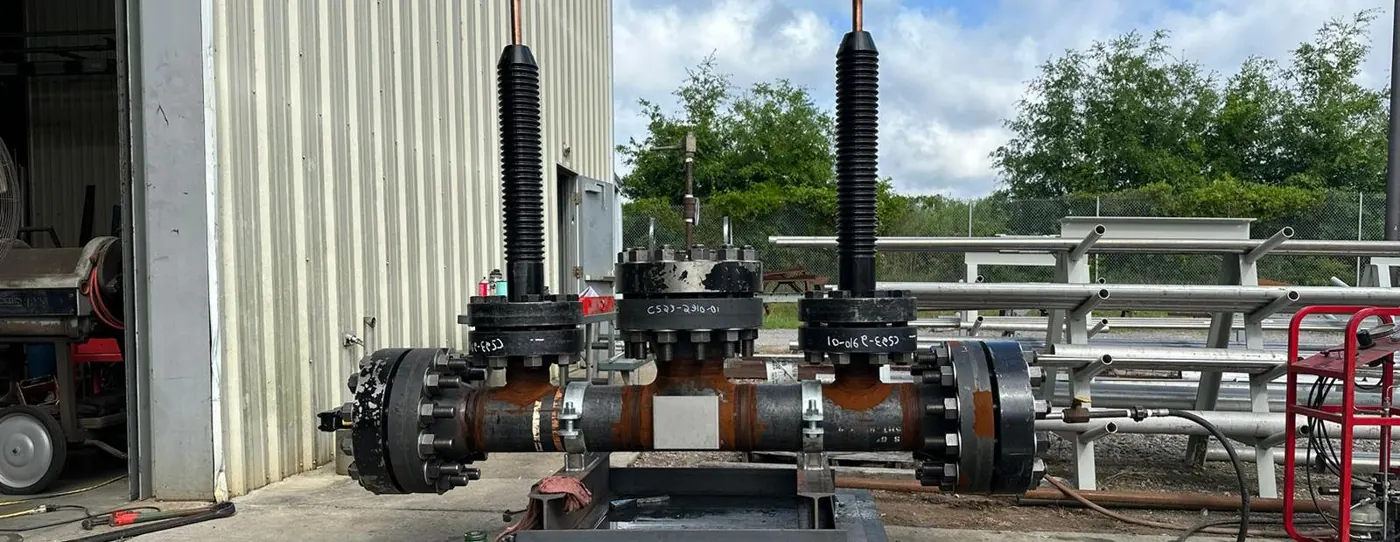
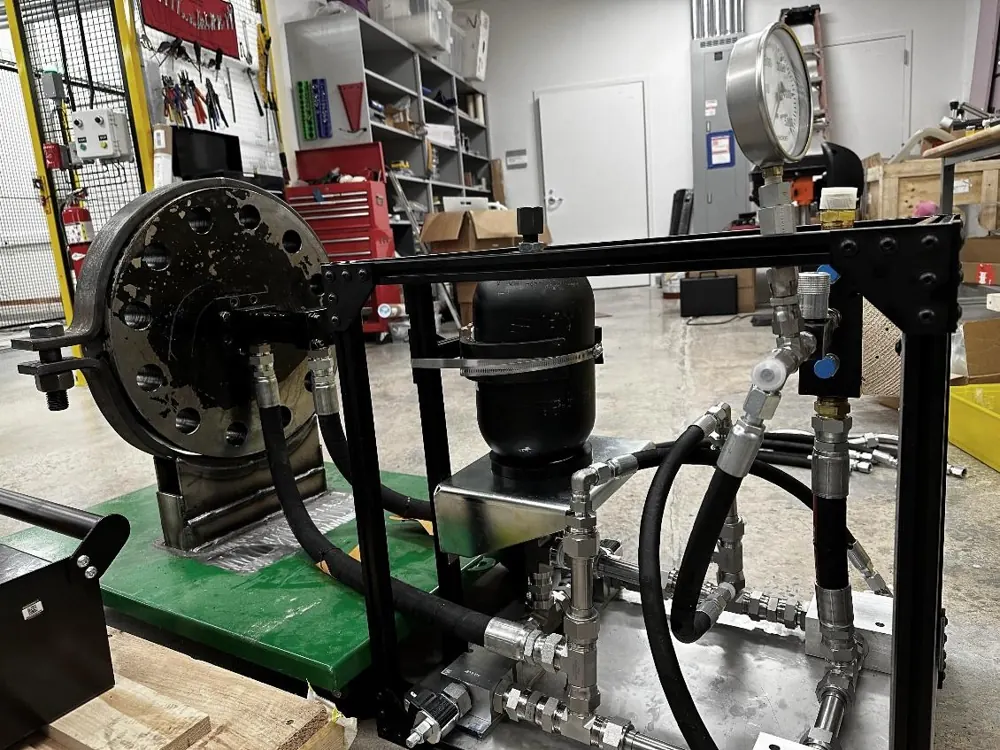
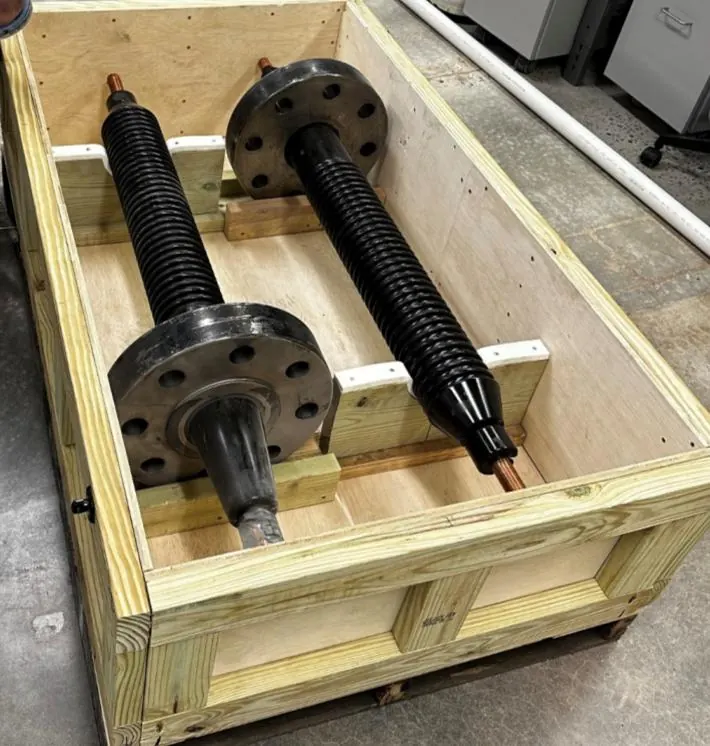
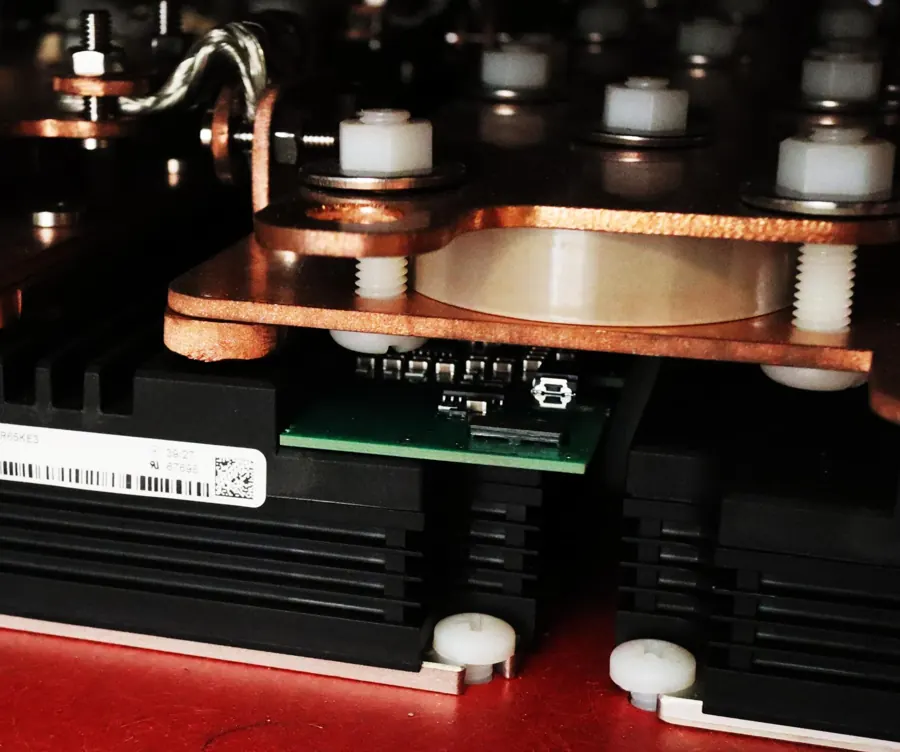
Built in Georgia Tech research with university partners. TESLA and EDISON are research project names, not WattEDGE products.
Shown so far
Shown at Georgia Tech
- Breakdown strength of supercritical CO₂ rising with density, in a 0.1 mm uniform gap.
- A DC hybrid breaker built around a fast mechanical switch.
- A compact fast switch insulated with supercritical CO₂ for medium-voltage DC (2025).
- An 8.9 kA peak arc quenched in an AC test (2026).
- Follow-up work on contact erosion and on keeping the fluid supercritical in the cold.
References
Selected Georgia Tech publications (10)
- Z. Jin, S. M. Neall, A. J. Cruz Feliciano, Y. Liu, M. S. Al Hossain, C. Park, L. Graber, First High-Current Arc Quenching in Supercritical CO2, IEEE Transactions on Power Delivery, vol. 41, no. 3, 2026.
- A. J. Cruz Feliciano, Z. Jin, L. Graber, Supercritical Fluids as Alternative Insulation and Arc-Quenching Medium, Applied Sciences, vol. 15, no. 18, 2025. Open access.
- Z. Jin, Q. Yang, A. Cruz, L. Graber, Development of a Supercritical Fluid-Insulated Fast Mechanical Switch for MVDC Hybrid Circuit Breakers, IEEE APEC, 2025.
- M. Pothuri, A. J. Cruz Feliciano, Z. Jin, L. Graber, Investigation of Erosion of Switchgear Contacts in Supercritical Carbon Dioxide, IEEE Electrical Insulation Conference, 2026.
- S. M. Neall, A. Duffy, Z. Jin, A. J. Cruz, S. Garimella, L. Graber, Thermal Management of Supercritical Carbon Dioxide-Insulated High Voltage Apparatus, IEEE Electrical Insulation Conference, 2026.
- J. Wei, A. Cruz, A. West, F. Haque, C. Park, L. Graber, Theoretical Modeling and Experimental Testing on the Electrical Breakdown in Supercritical Fluids, IEEE CEIDP, 2021.
- J. Wei, A. Cruz, F. Haque, C. Park, L. Graber, Investigation of the dielectric strength of supercritical carbon dioxide-trifluoroiodomethane fluid mixtures, Physics of Fluids, vol. 32, 2020.
- C. Xu, T. Damle, M. Bosworth, D. Soto, R. Agarwal, M. Steurer, L. Graber, Piezoelectrically Actuated Fast Mechanical Switch for MVDC Protection, IEEE Transactions on Power Delivery, vol. 36, no. 5, 2021.
- L. Graber, M. M. Steurer, M. Saeedifard, Z. Jin, Q. Yang, M. Tousi, Efficient DC Interrupter with Surge Protection (EDISON), in Direct Current Fault Protection, Springer, 2023.
- IEEE Spectrum, First Supercritical CO2 Circuit Breaker Debuts, 2025.
Work by other groups (3)
Groups at TU Eindhoven, Kumamoto University, NTNU and SINTEF, and in industry, have published on breakdown, recovery and arcs at very high pressure. They agree that strength follows density.
- K. Niayesh, review of breakdown and arcs in ultra-high-pressure gases and supercritical fluids, Plasma Physics and Technology, vol. 10, no. 2, 2023.
- J. Zhang et al., IEEE Transactions on Dielectrics and Electrical Insulation, vol. 22, no. 4, 2015 (supercritical nitrogen switches).
- T. Kiyan et al., IEEE Transactions on Plasma Science, vol. 35, no. 3, 2007 (breakdown in supercritical CO₂).
Acknowledgment
The research described on this page was carried out at the Georgia Institute of Technology and funded in part by the Advanced Research Projects Agency-Energy (ARPA-E), U.S. Department of Energy. The views expressed here are those of WattEDGE and do not necessarily reflect those of the United States Government or any agency thereof.
Get in touch.
Or write to info@wattedge.co